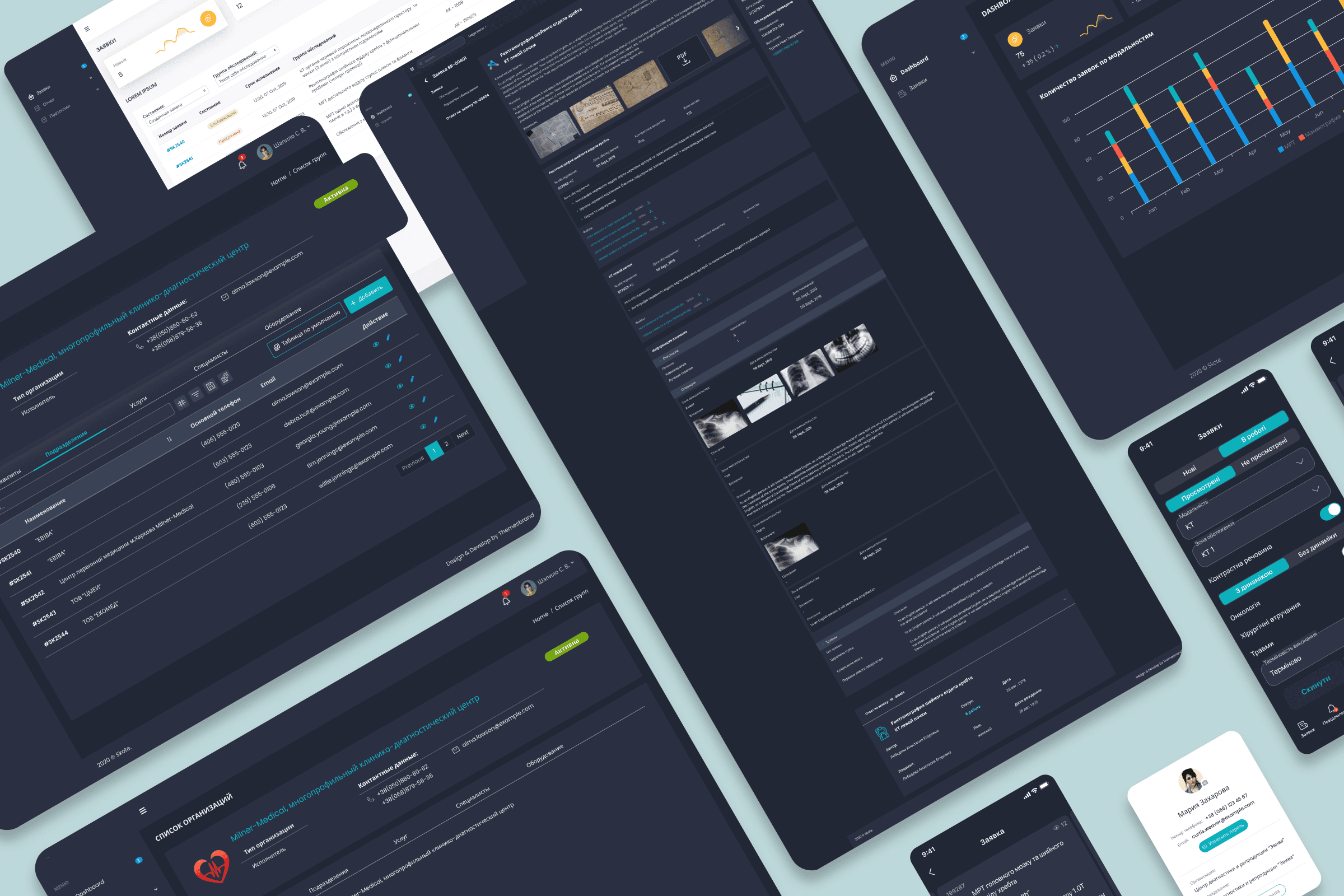
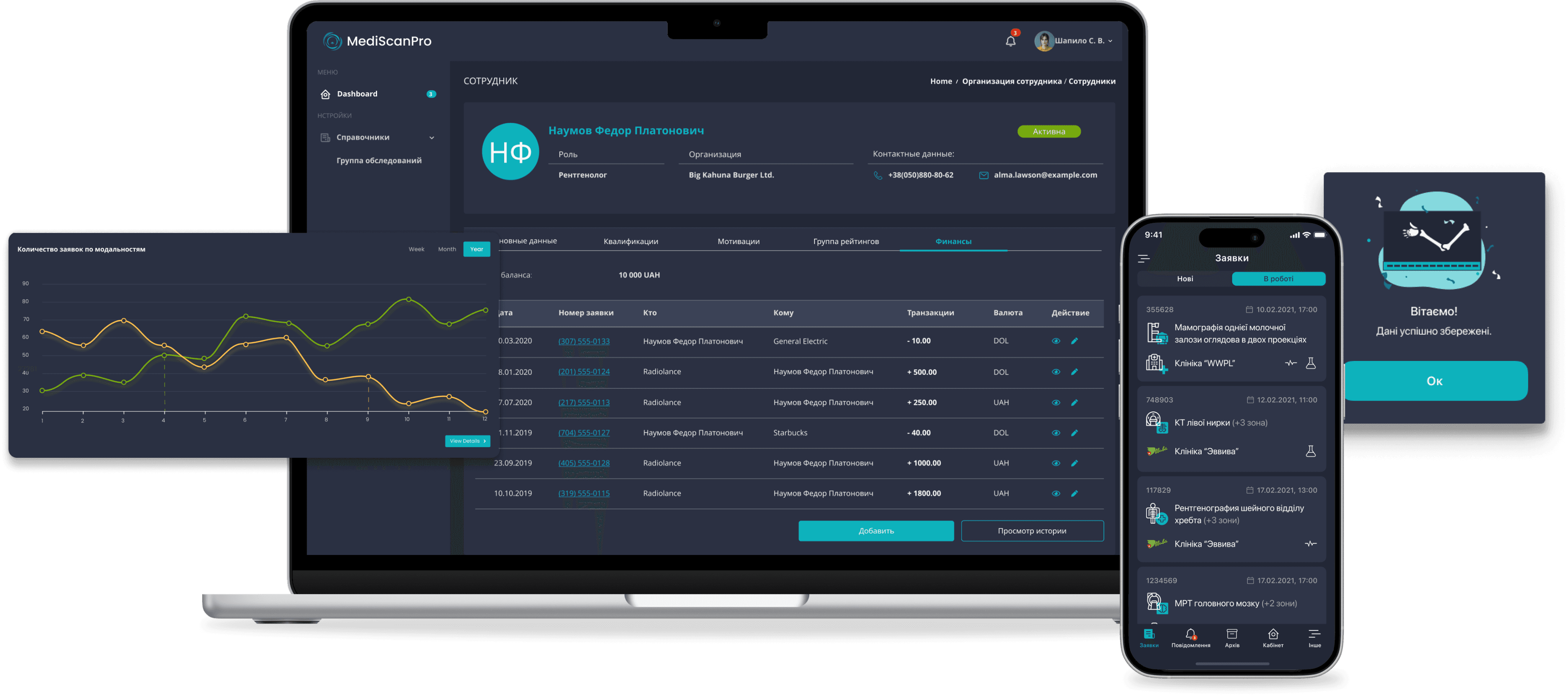
In healthcare, every second matters. I designed MediScanPro, (Note! that name of the product was changed), a platform that empowers radiologists, administrators, and medical registrars to process imaging requests, diagnose patients, and manage medical records with speed and precision. By transforming a complex system into an intuitive tool while maintaining strict healthcare compliance standards, we helped medical professionals save time and improve patient care.
Project Snapshot:
Role: Senior Product Designer
Team: 2 Project Managers, 1 Business Analyst, 5 Developers, 1 Dev Ops, 2QA
Platform: Web, iOS, Android
Tools: Figma, FigJam, Atlassian, Slack, Zoom, etc.
Timeline: 6 months, 2021
Contributions: User Research, UX Strategy, Wireframing, UI Design, Prototyping, Design System Development, Mentoring
About the product:
MediScanPro is a professional platform that provides accurate and timely medical analysis of the results of magnetic resonance imaging, computed tomography, radiography and mammography. It offers three interfaces (Web Admin, Web and Mobile Doctor, and Web Registrar) for secure access to medical records. This platform helps medical institutions manage requests from other institutions, diagnose and treat patients, and make informed decisions based on magnetic resonance imaging, computed tomography, radiography and mammography results.
The Challenge: Streamlining Medical Imaging Workflows
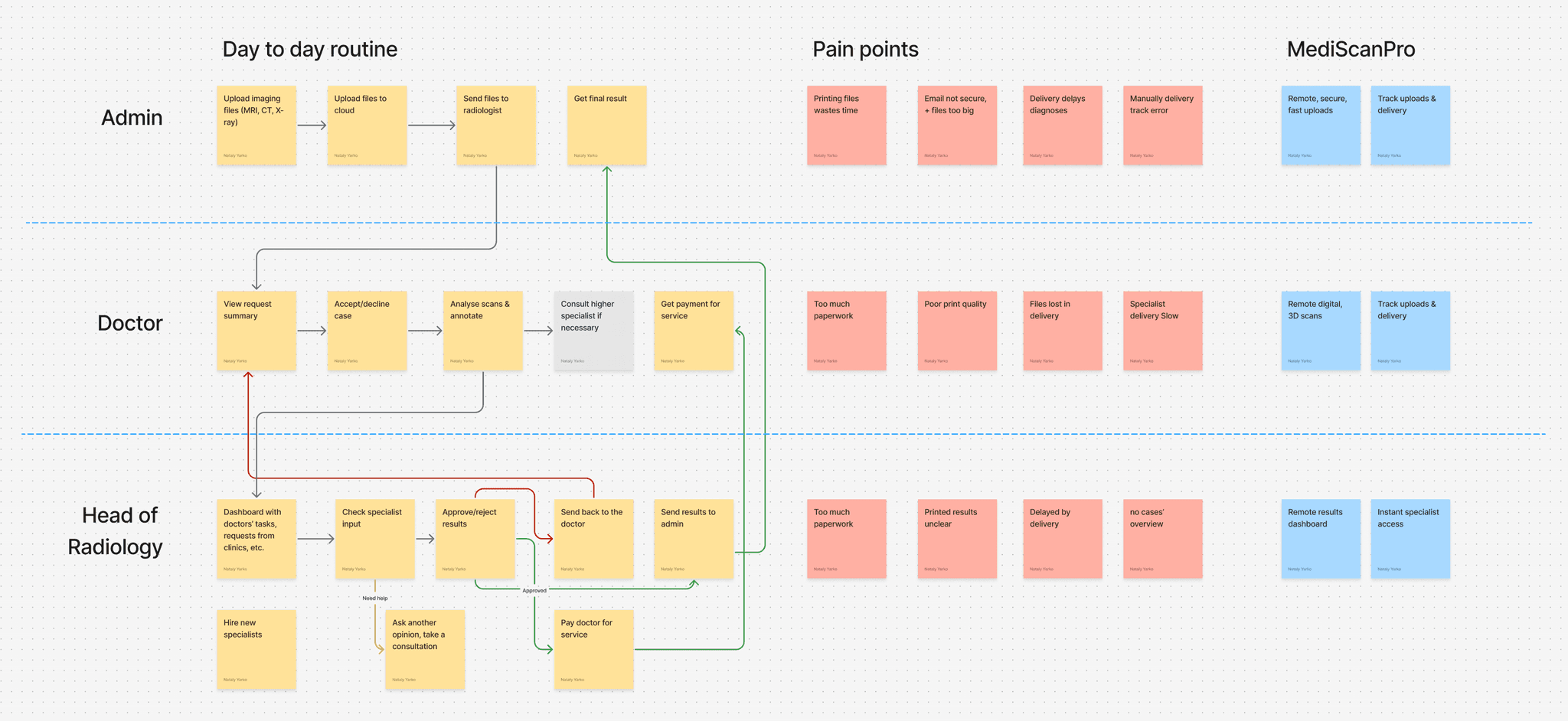
MediScanPro manages MRI, CT, X-ray, and mammogram data for three key users: admins who prepare and send imaging files, doctors who analyse scans, and heads of radiology who ensure accuracy by reviewing conclusions. My goal was to create a platform that simplified these tasks, reduced delays, and kept patient care first, all while handling sensitive data securely.
Through user research, I uncovered critical workflow bottlenecks that were impacting patient care:
For Administrators:
File upload chaos: Manual upload processes took 15-20 minutes per case, with frequent failures requiring restarts
Tracking blindness: No visibility into request status meant constant phone calls to check progress
Security compliance anxiety: Uncertain whether file transfers met HIPAA and GDPR requirements
For Radiologists:
Mobile limitations: Existing tools forced doctors to return to desktop computers, delaying urgent diagnoses by hours
Interface overwhelm: Critical patient information was buried in cluttered screens, slowing decision-making
Context switching: Jumping between multiple systems to accept cases, view images, and submit reports
For Heads of Radiology:
Review bottlenecks: Manual approval processes created queues of 50+ pending cases
Quality control gaps: Limited visibility into diagnostic accuracy and completion times
Resource allocation issues: No data insights to optimize radiologist workloads
The cost of these inefficiencies was significant: delayed diagnoses, frustrated medical staff, and ultimately, patients waiting longer for critical results.
3x
30-45%
more scans processed per day
+40%
Research Methodologies: Grounding Design in Real Use
To design effectively for healthcare professionals, I applied a mix of qualitative and behavioral research methods:
User Interviews & Surveys – Conducted with radiologists, registrars, and admins to uncover real-world workflows and frustrations
Contextual Observation – Shadowed users as they worked with legacy systems to spot inefficiencies and gaps
Moderated Usability Testing – Tested early prototypes with real users to validate flows and catch friction early
Task Analysis – Mapped key roles and processes to identify time-critical interactions
Feedback Loops – Ongoing check-ins with stakeholders and medical staff during iterative development
This research ensured that every design decision aligned with the users’ needs and the realities of clinical environments.
Understanding the Users: Researching Pain Points
To design a system that truly fit medical professionals’ needs, I focused on understanding their real-world workflows.
This uncovered common pain points—like slow request tracking, confusing interfaces, and mobile tools that didn’t support fast decision-making.
Key insights:
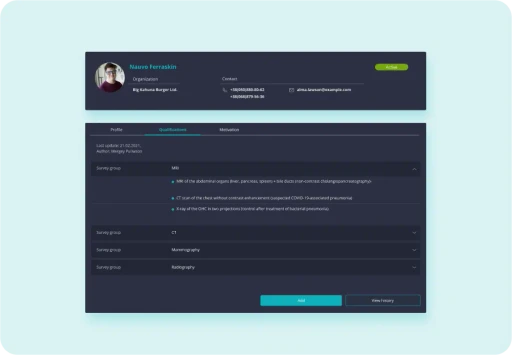
Admins needed fast, secure ways to upload and track imaging files.
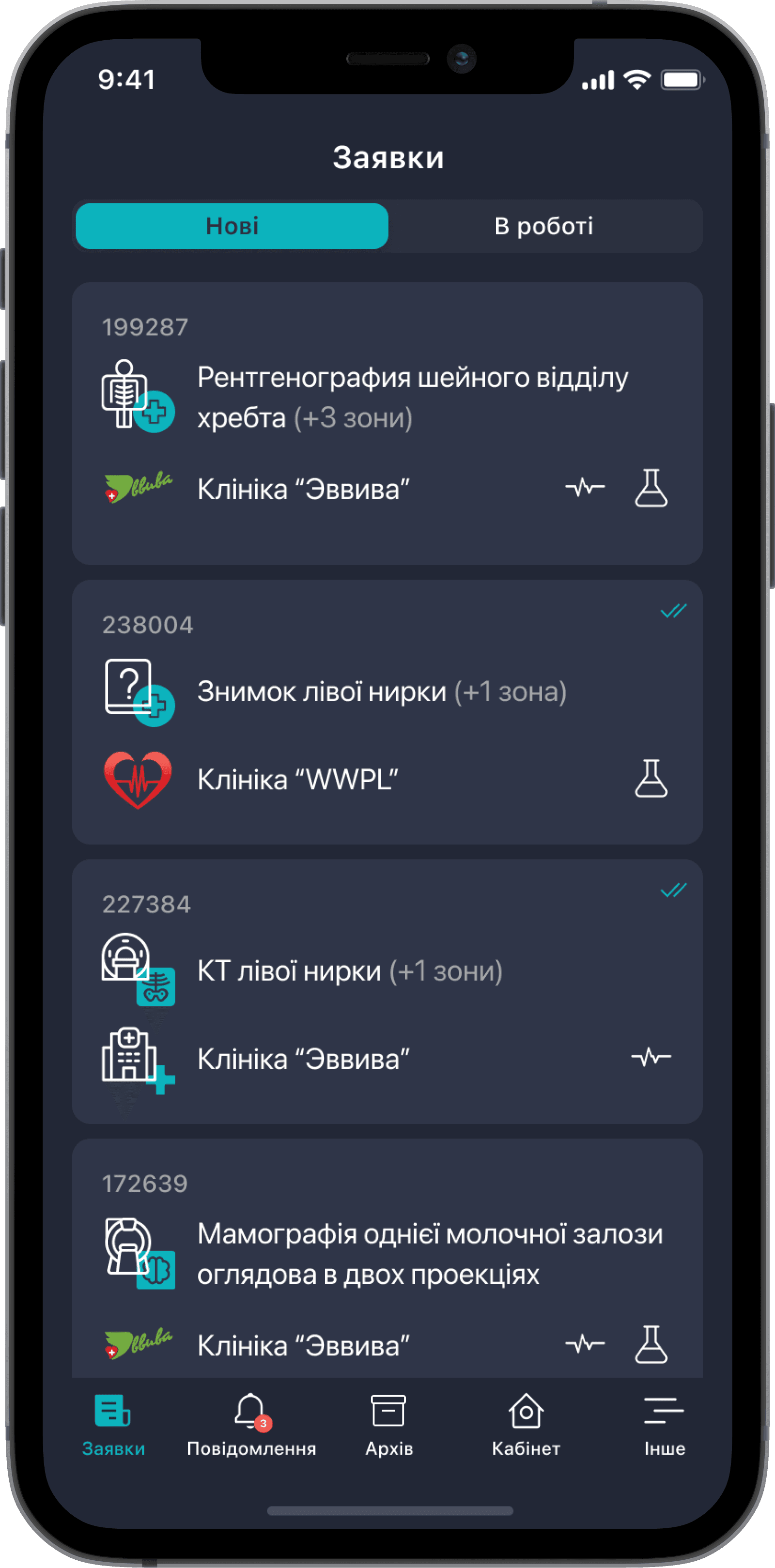
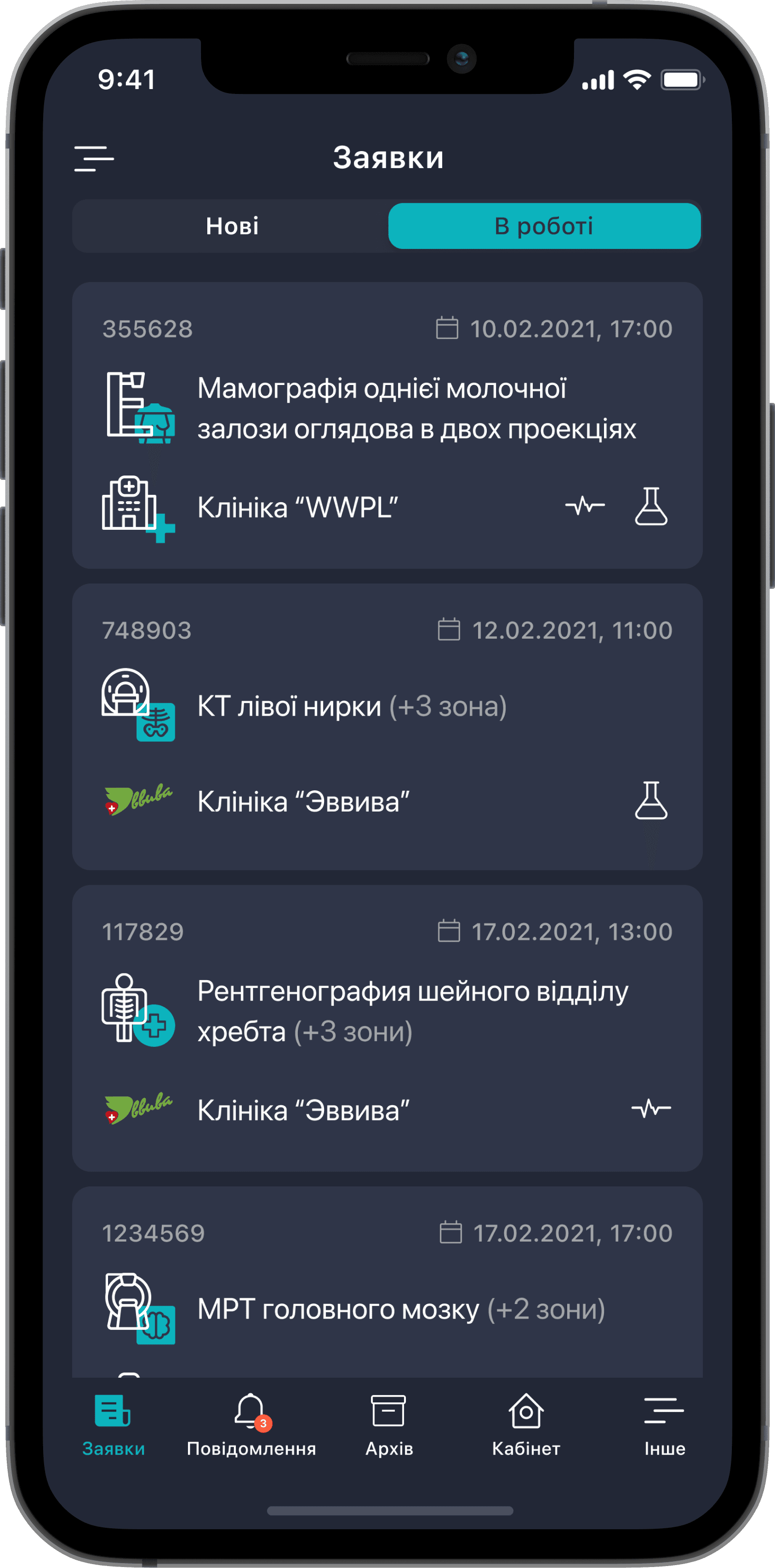
Doctors wanted clear scan views and mobile tools to accept or decline requests instantly.
Heads of radiology required a simple dashboard to review and approve results efficiently.
Based on user feedback and testing data, I designed distinct workflows for each user type to address their specific pain points:
Designing the Solution: Creating an Intuitive User Experience
With insights in hand, I developed a comprehensive UX strategy to make MediScanPro both intuitive and efficient.
1. Mapping the Experience
I created user flows optimised each role’s tasks:
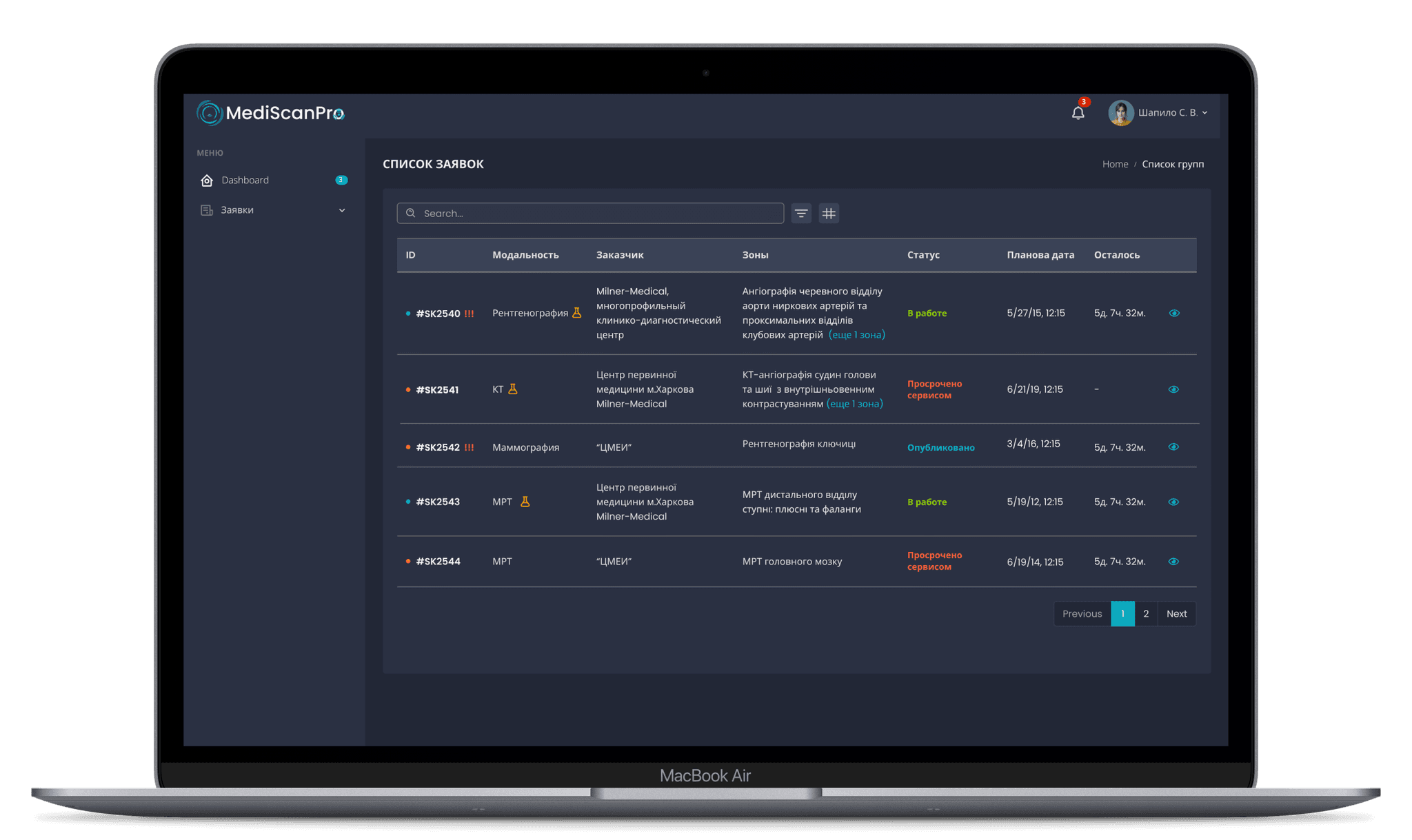
Admins could upload imaging files to the cloud and send them to doctors with real-time tracking.
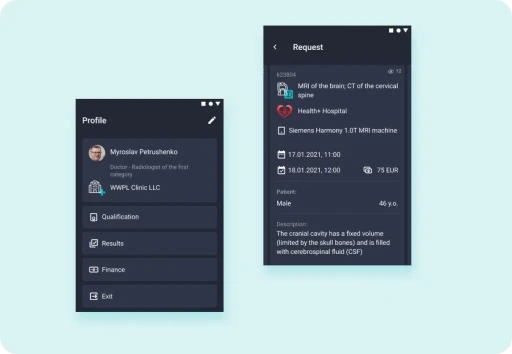
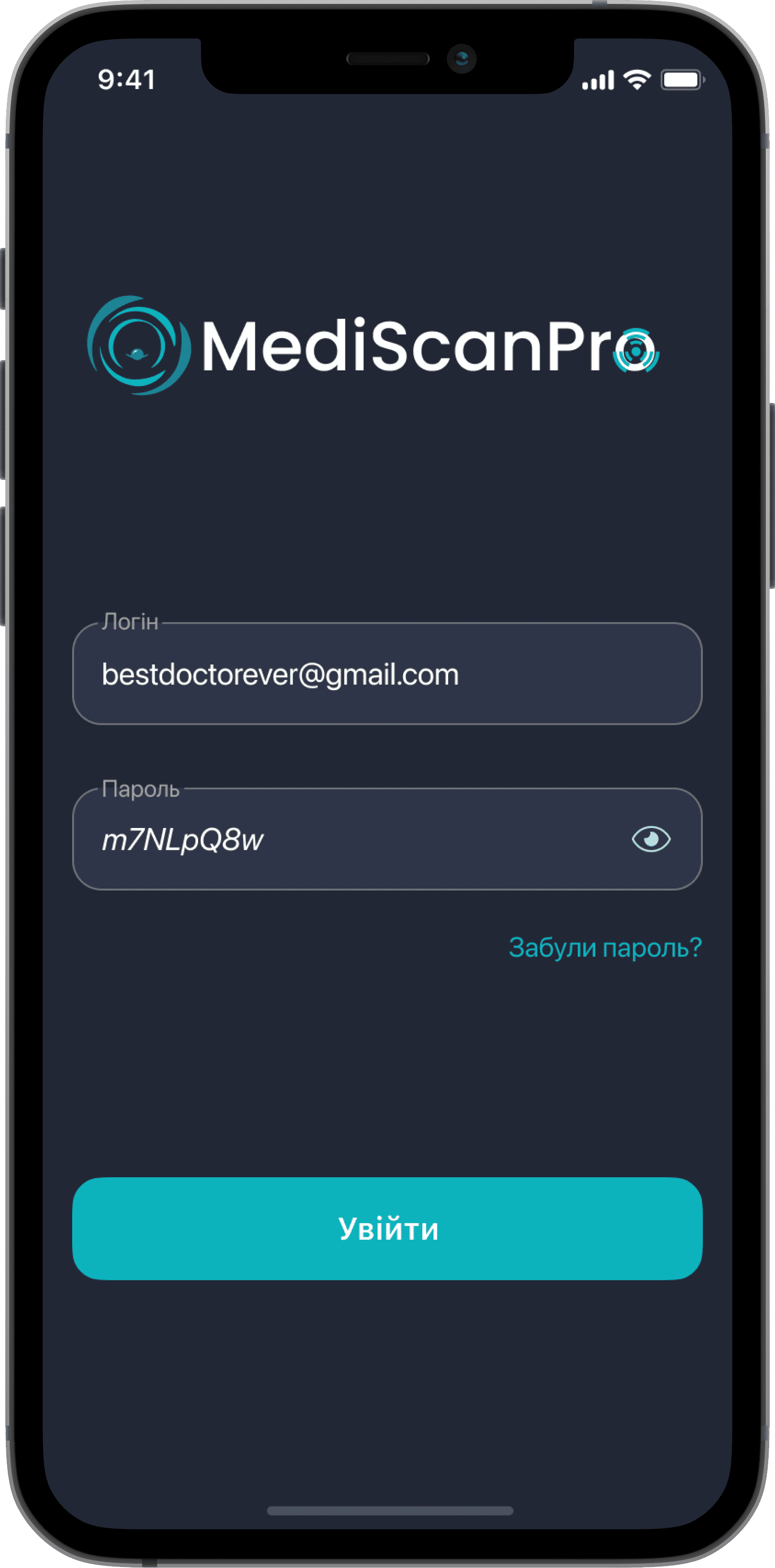
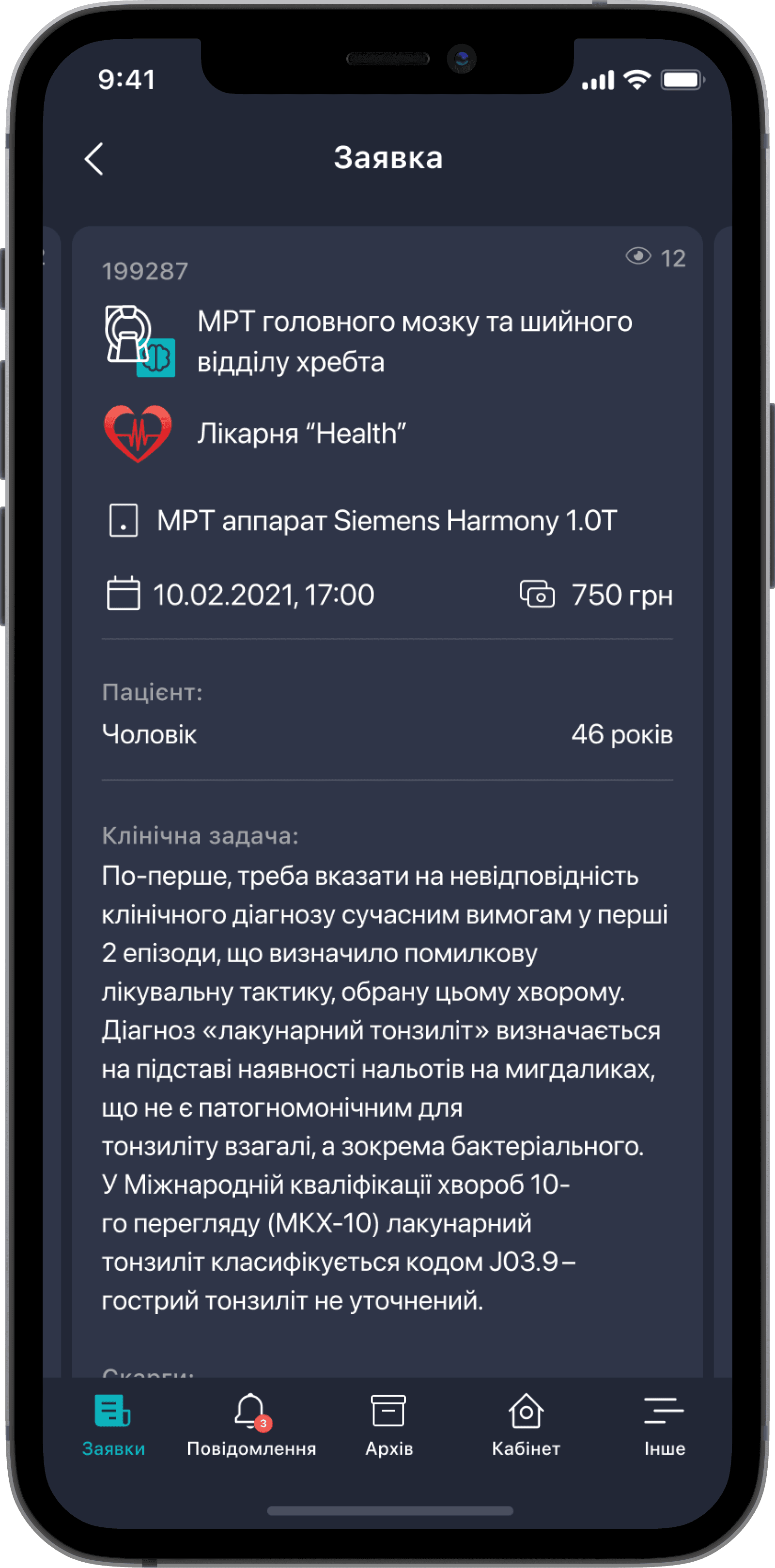
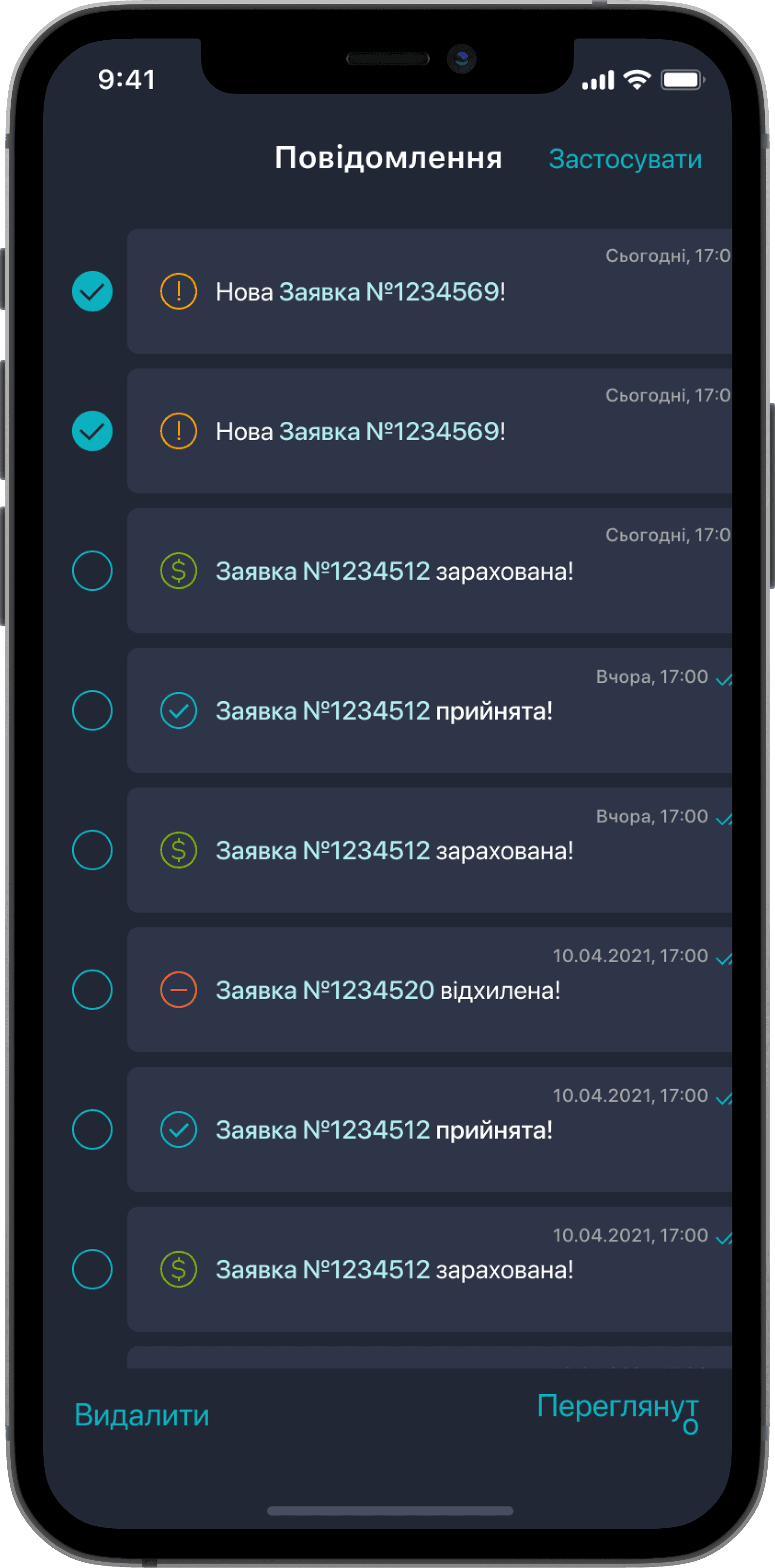
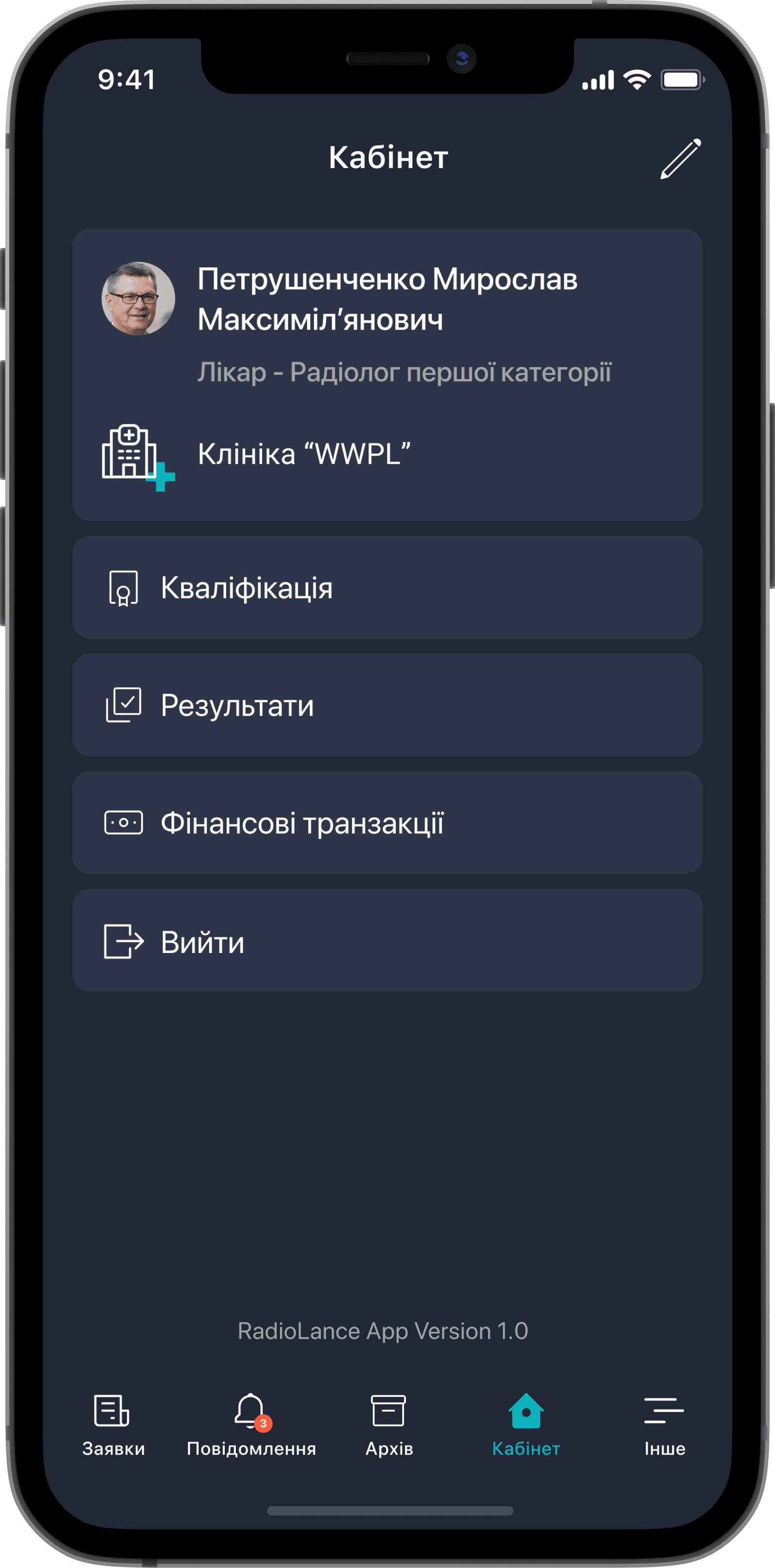
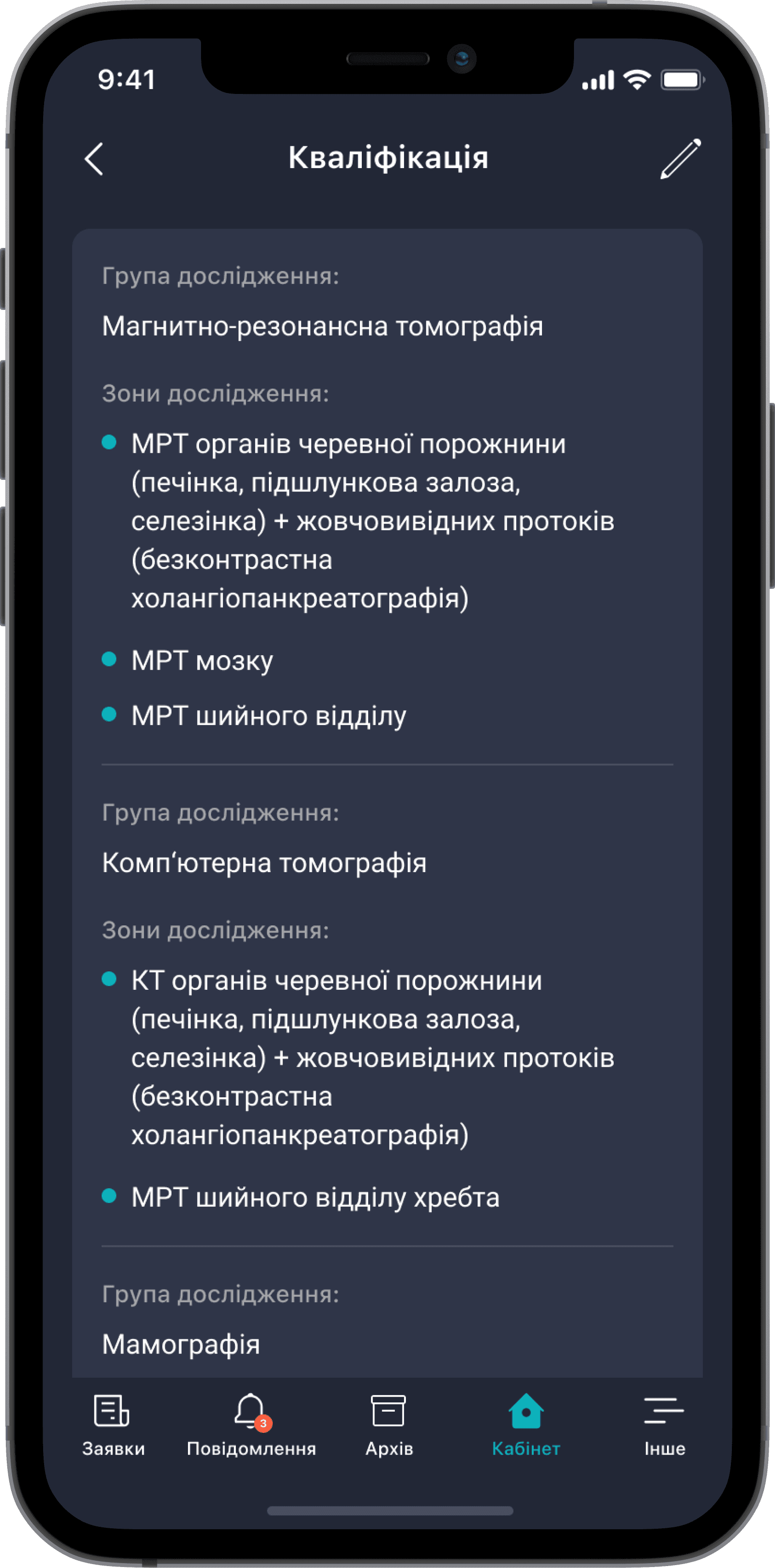
Doctors could view request summaries on iOS and Android apps, accept or decline cases with one tap, and annotate scans with detailed notes.
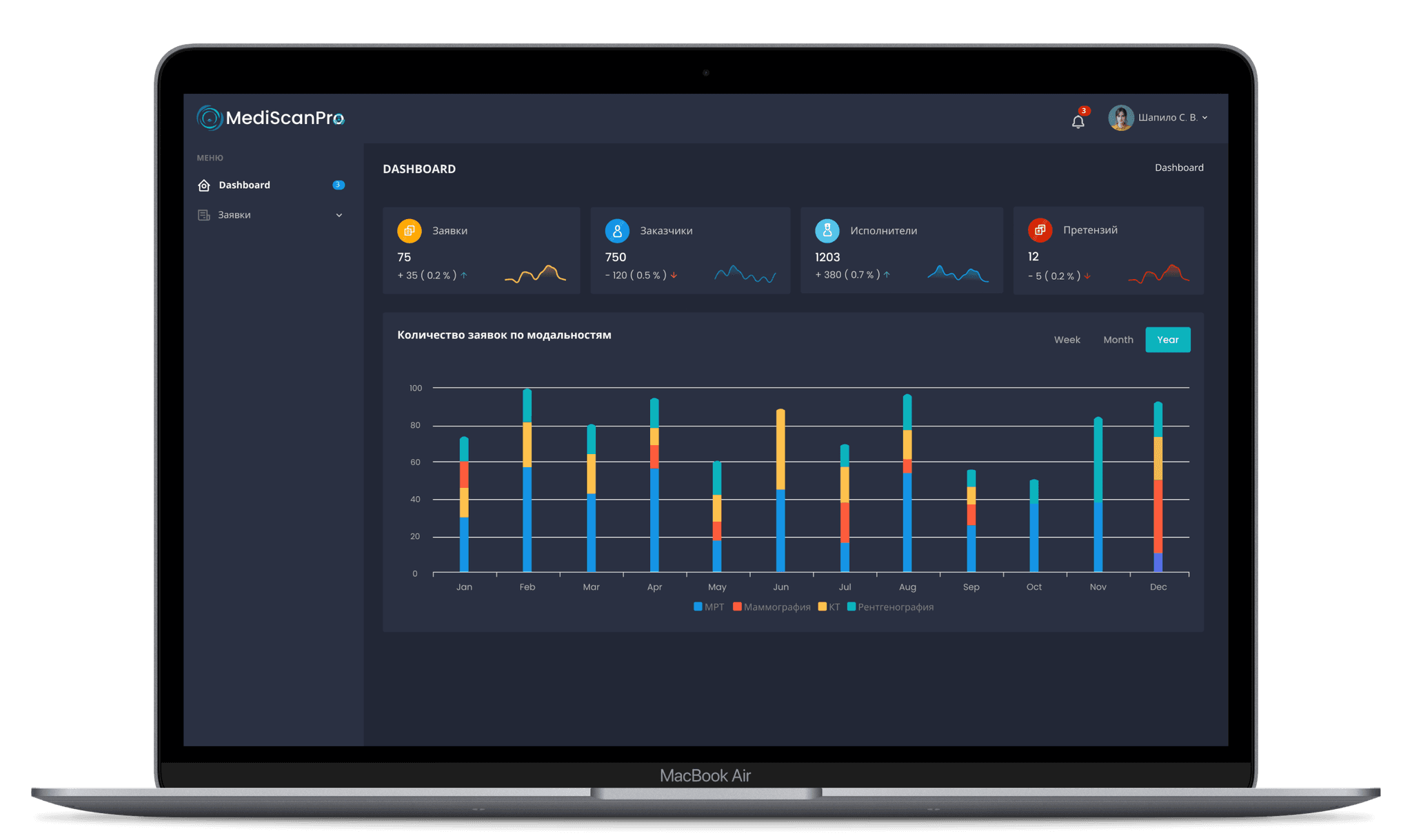
Heads of doctors could access a streamlined dashboard to review conclusions and provide final approvals.
2. Wireframing & Prototyping: Bringing the Vision to Life
Low-fidelity wireframes laid the foundation:
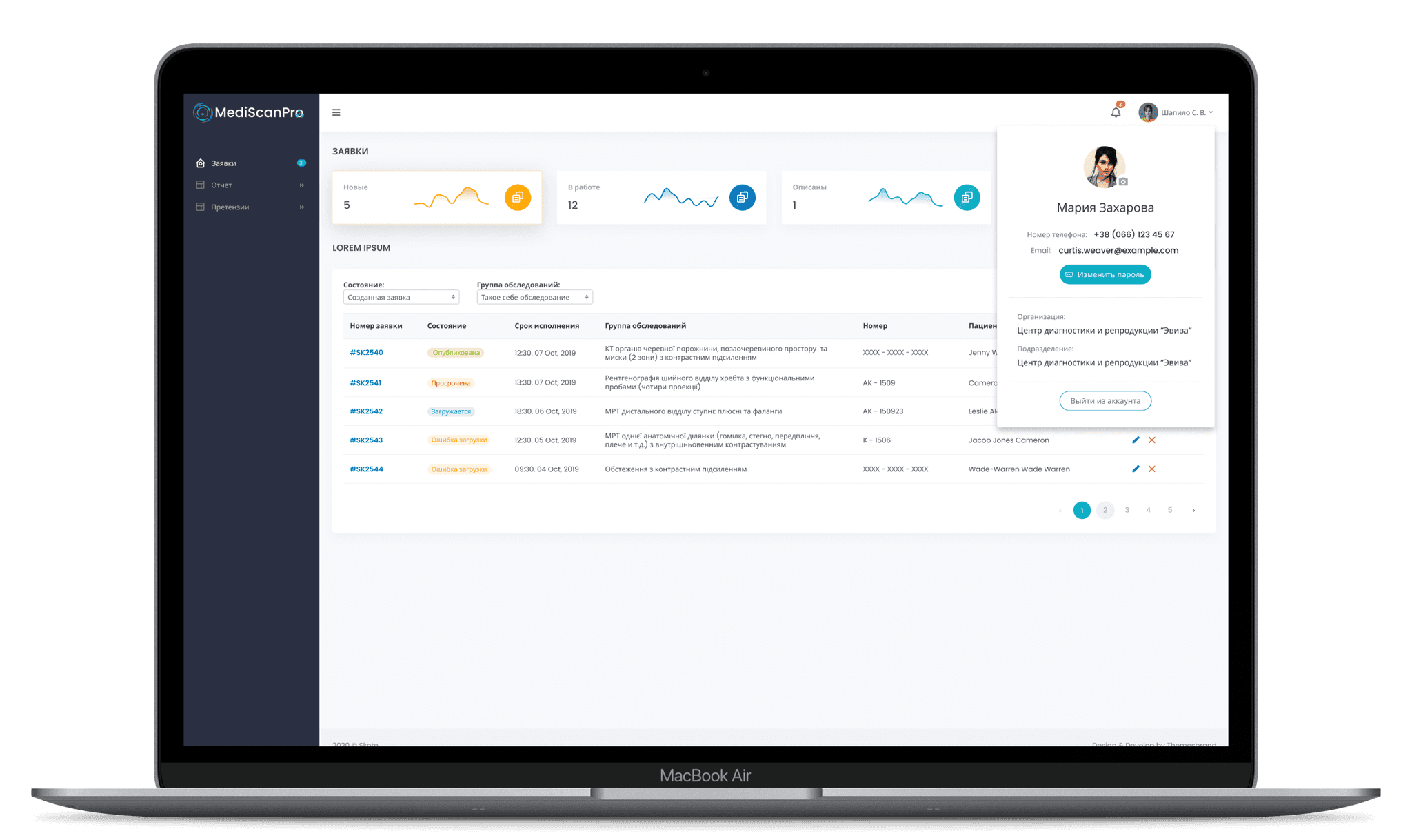
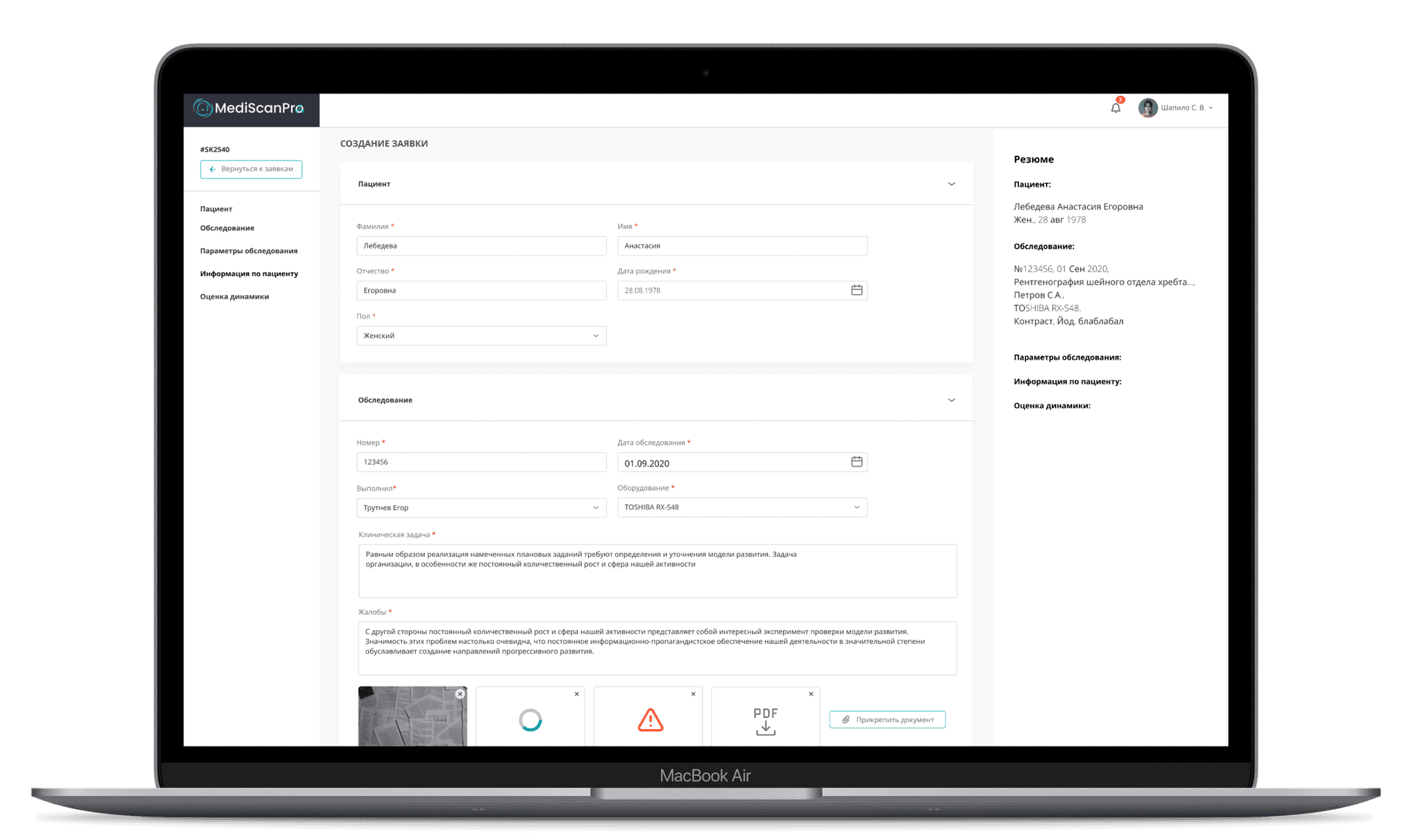
A drag-and-drop upload portal for admins with progress bars.
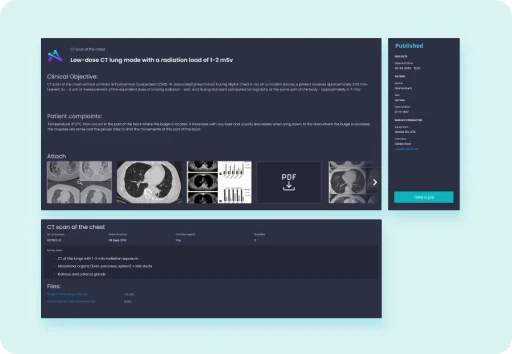
A clean, zoomable scan interface for doctors, optimised for web and mobile.
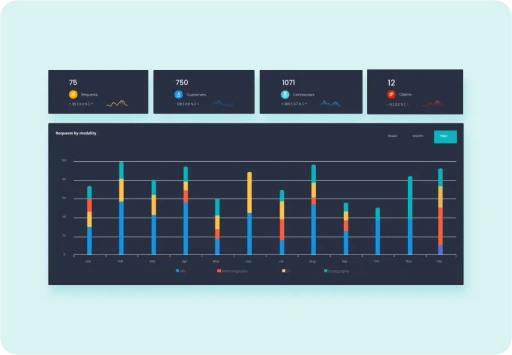
A concise results dashboard for heads of radiology, highlighting key findings.
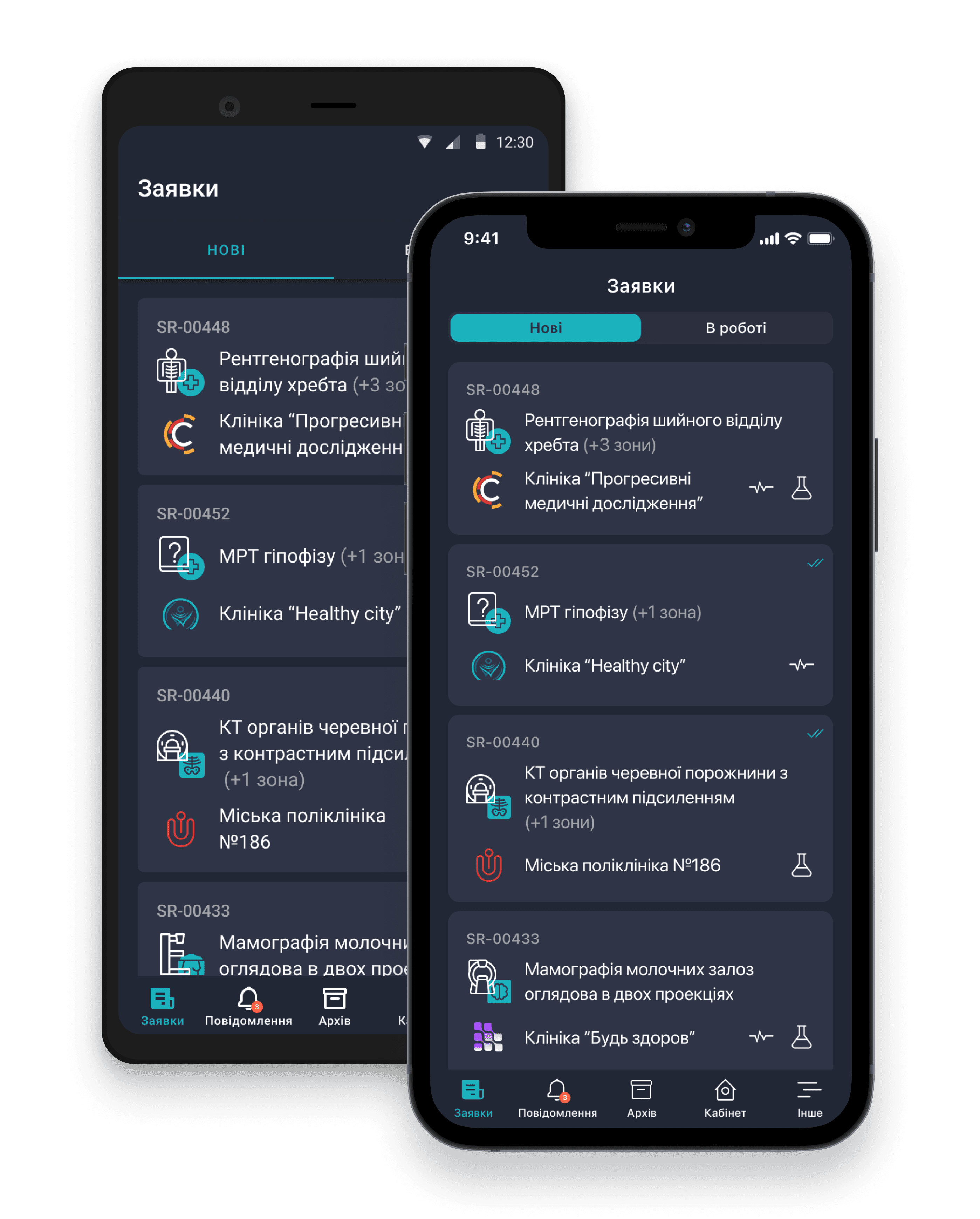
I tested early prototypes with doctors to refine mobile interactions—especially around how they reviewed and accepted cases on the go.
3. UI Design & Design System
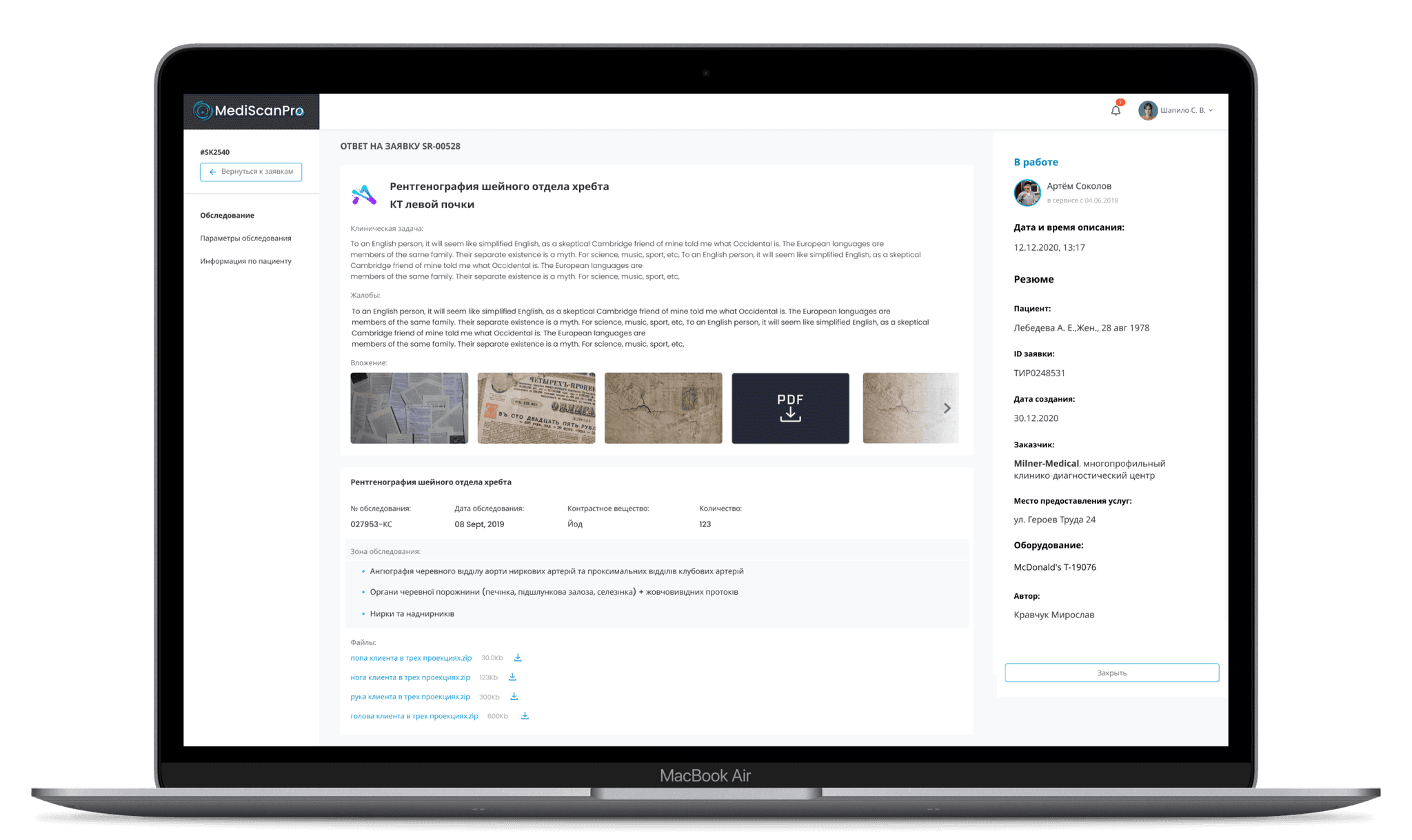
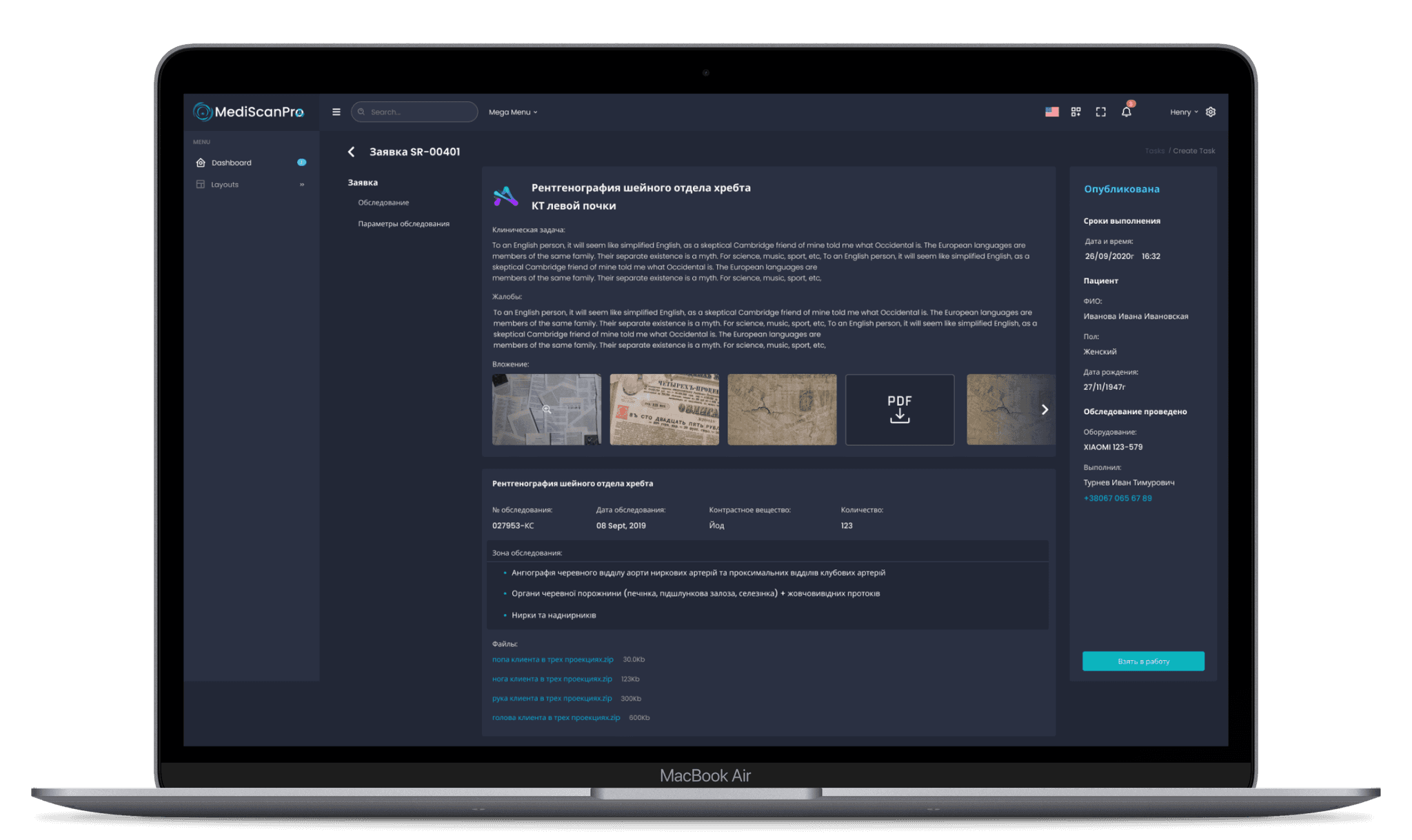
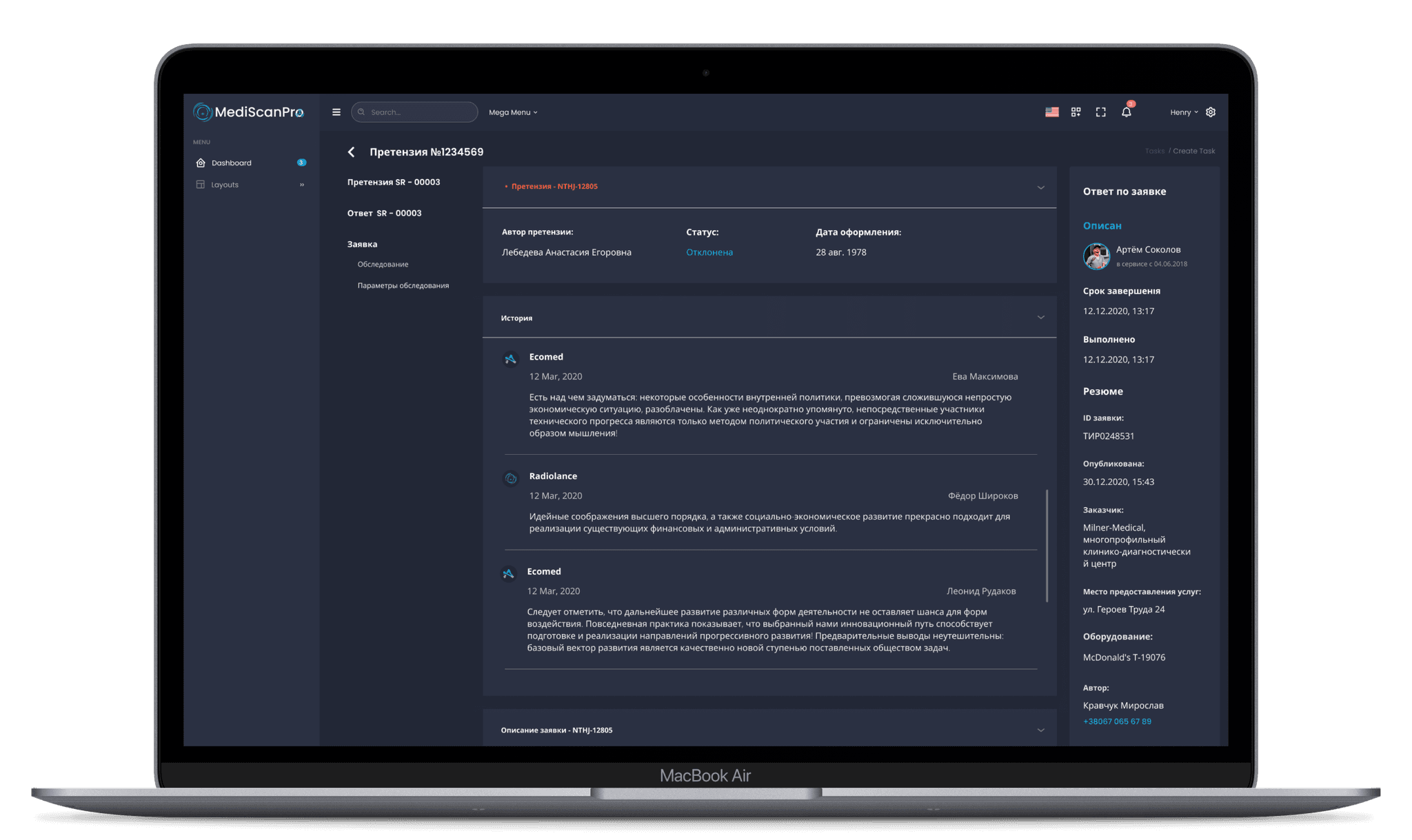
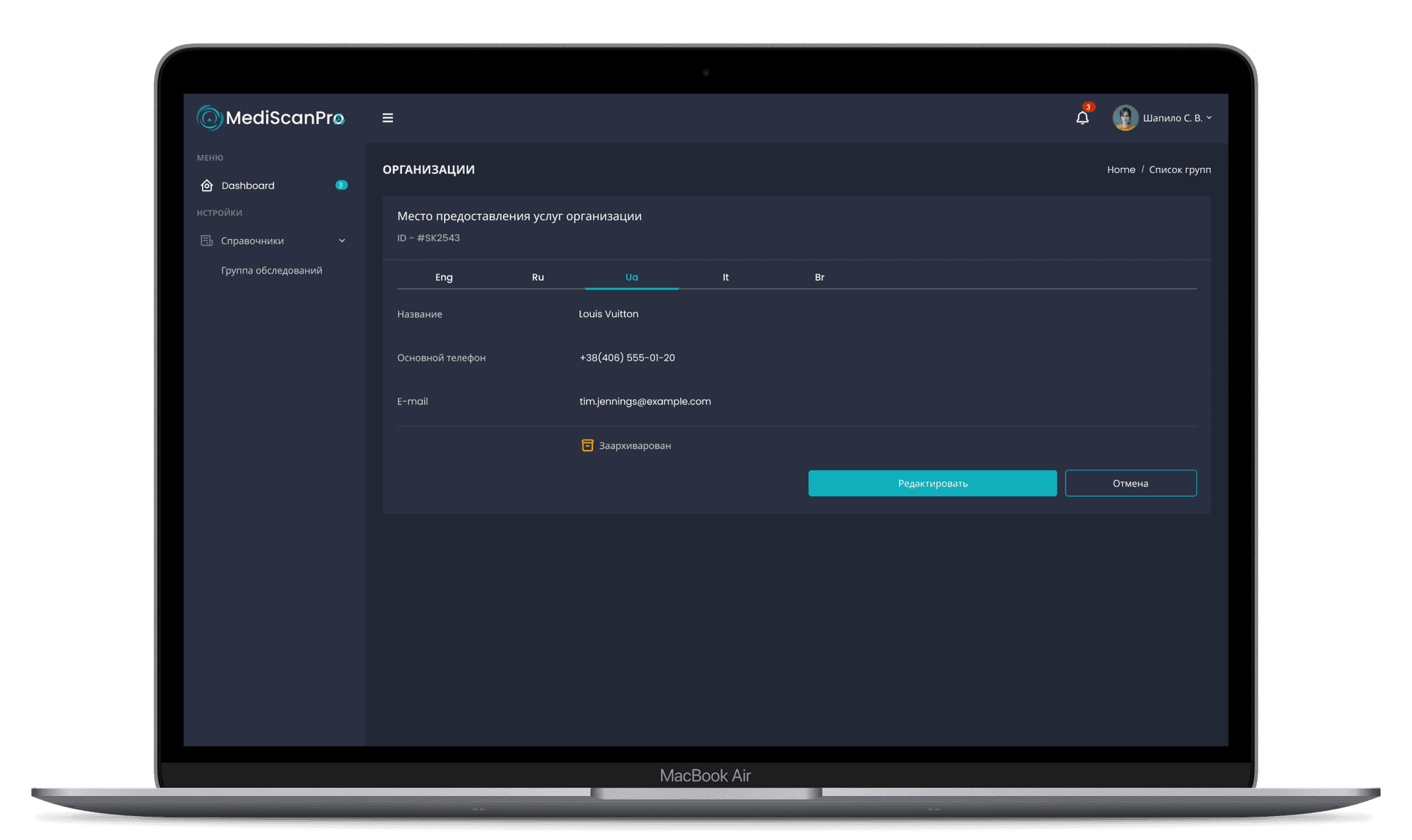
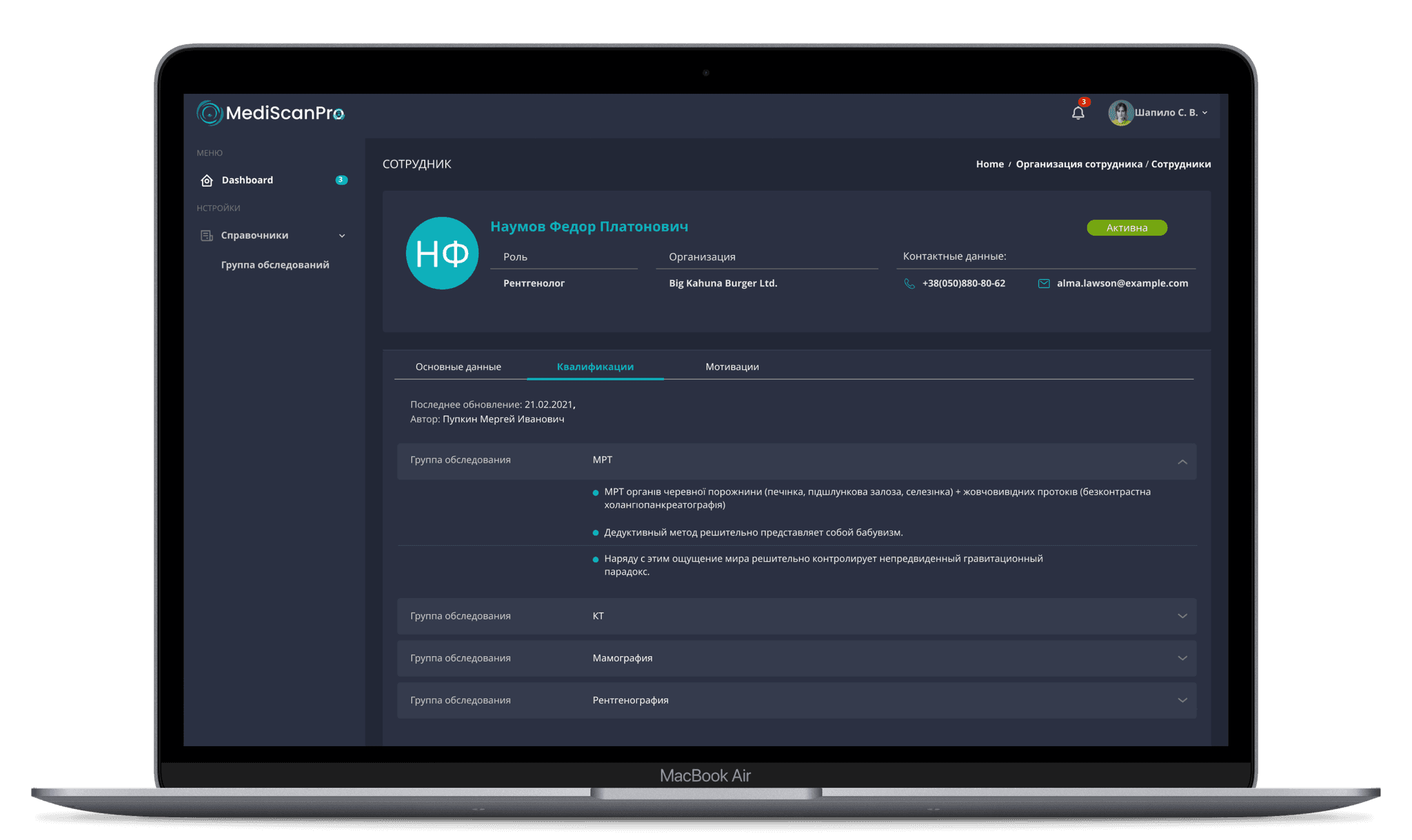
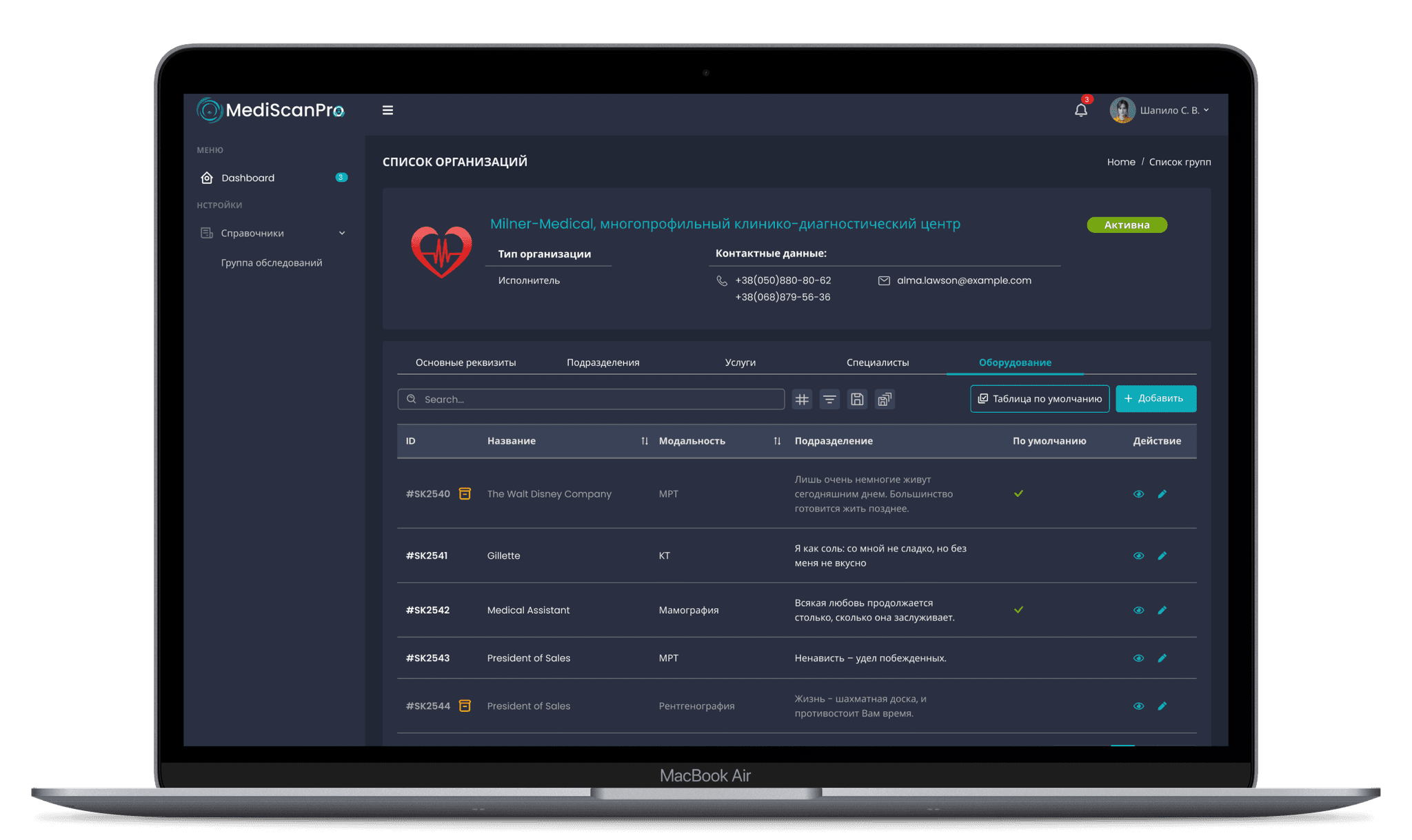
High-fidelity designs prioritized clarity:
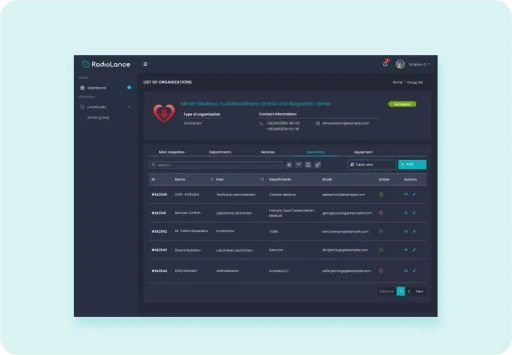
Admins got an intuitive upload interface with secure file previews.
Doctors enjoyed a modular scan layout for distraction-free analysis.
Heads of radiology saw a clear review panel with one-click approval tools.
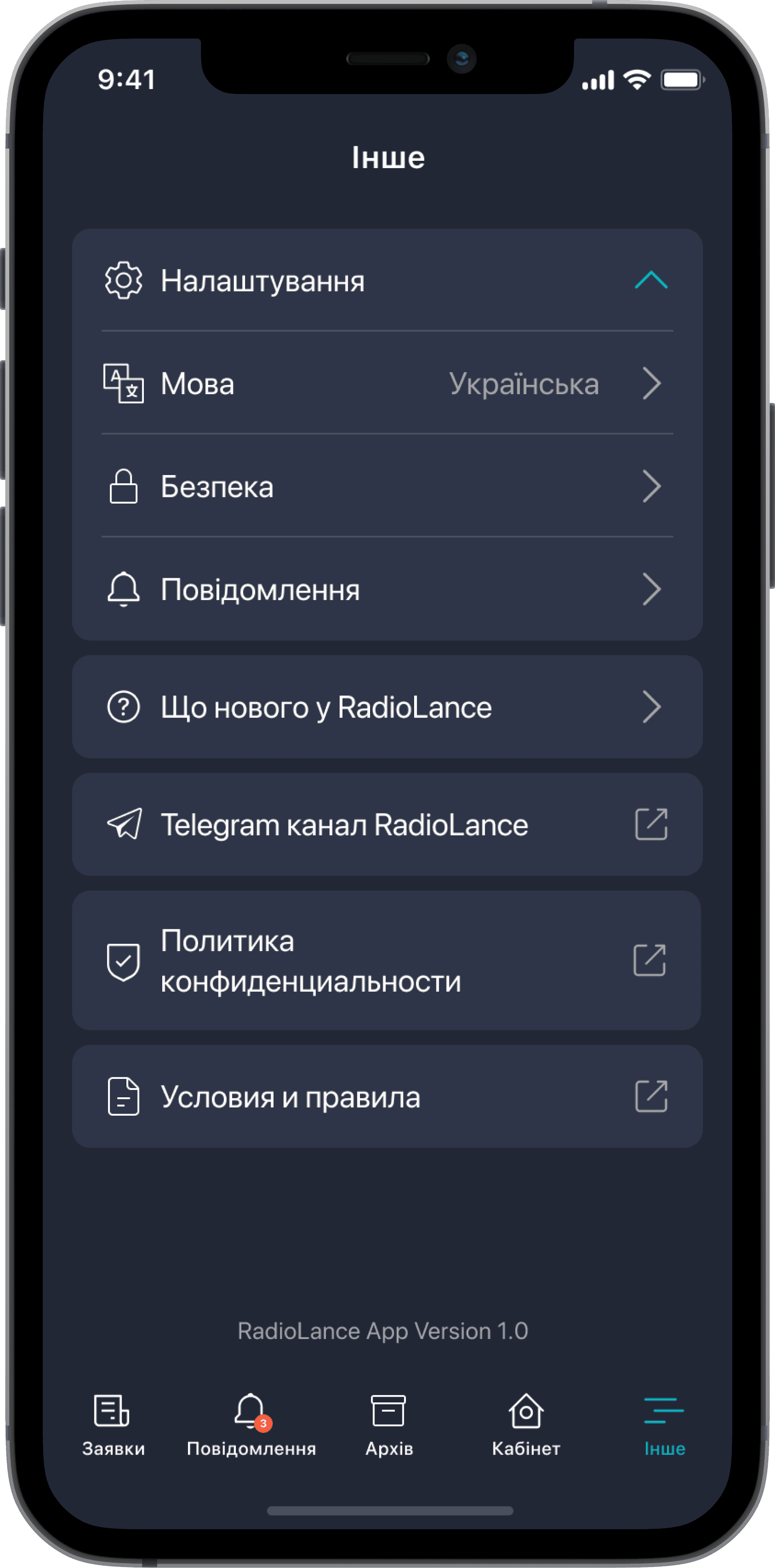
I built a reusable UI library to ensure consistency across web, iOS, and Android platforms.
Collaboration & Iteration
I partnered closely with developers during sprints, ensuring builds matched specs. Usability feedback during testing cycles led to simplifying the upload process and refining the review dashboard for faster decision-making.
The Impact: A Faster, More Efficient System
MediScanPro transformed medical imaging workflows:
3x faster processing, from upload to approval, cutting critical delays.
30-45% more scans handled, enabling hospitals to serve more patients.
Boosted satisfaction, with doctors praising the mobile app’s ease and heads of doctors valuing quick reviews.
Higher accuracy, reducing errors for better patient outcomes.
" We solved the staffing problem thanks to our collaboration with MediScanPro (Radiolance) more than a year ago. Since then, we send the results of brain and other organ CT scans for description and interpretation almost daily. This amounts to about 100 studies per month. The main advantages for us are speed, quality of descriptions, and adherence to the terms of the contract. Therefore, I sincerely recommend cooperation with MediScanPro (RadioLance.)"
R. Pushkarenko
Lessons Learned: Designing for High-Stakes Environments
This project taught me the power of empathy in high-stakes design. By listening to users and iterating relentlessly, I learned to balance complexity with simplicity. Designing for healthcare also deepened my appreciation for clarity and precision—every decision can impact lives.